
Typically, distal 'microtephras' are of limited sample size and variable condition due to burial in a variety of environments (e.g. marine, lacustrine). Invariably, they are present as mixtures of glass shard populations (<2mm). Given their size it is vital to utilise microprobe, ion probe (SIMS) and laser-based techniques to optimise determination of their geochemistry. Oxygen isotopes will be used as an internal check on the state of preservation of tephra shards since secondary processes will induce marked changes in O isotope composition. Individual shards will be studied except for solution ICP-MS, where in some cases “composite” analysis will have to be undertaken if shards of insufficient size are available. Individual shards or composites of shards can be analysed for immobile elements using SIMS and LA ICP-MS and for Pb isotope ratios using conventional solution techniques.
Geographically the main target locations for proximal work in RESET within the period 0-100 ka are: (1) southern Iceland; (2) Eifel, Germany; (3) Cantal, France; (4) Terceira, Azores; (5) Alban Hills - Sabatini, Italy; (6) Campi Flegrei-Ischia, Italy; (7) Somma-Vesuvius, Italy; (8) Vulcano-Salina-Stromboli, Aeolian Islands, Italy; (9) Etna, Sicily; (10) Pantelleria, Italy; (11) Erciyes Dag and Hasan Dag, Anatolia, Turkey.
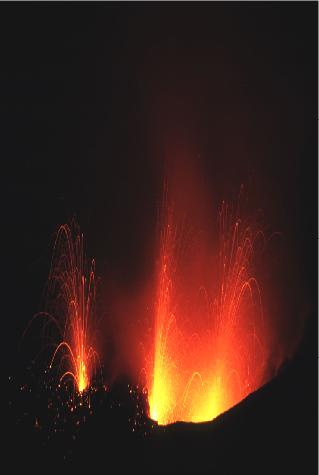 The term 'tephra' comes from the Greek for 'ash'. Tephra deposits have a crucial role to play as a dating method in the geological record. Furthermore, the discovery of 'microtephras' in diverse sedimentary contexts has greatly enhanced the opportunity to precisely link archaeological events to other continental and marine records. In recent years rapid progress has been made in refining tephrochronology as a precise correlation and dating tool.


